
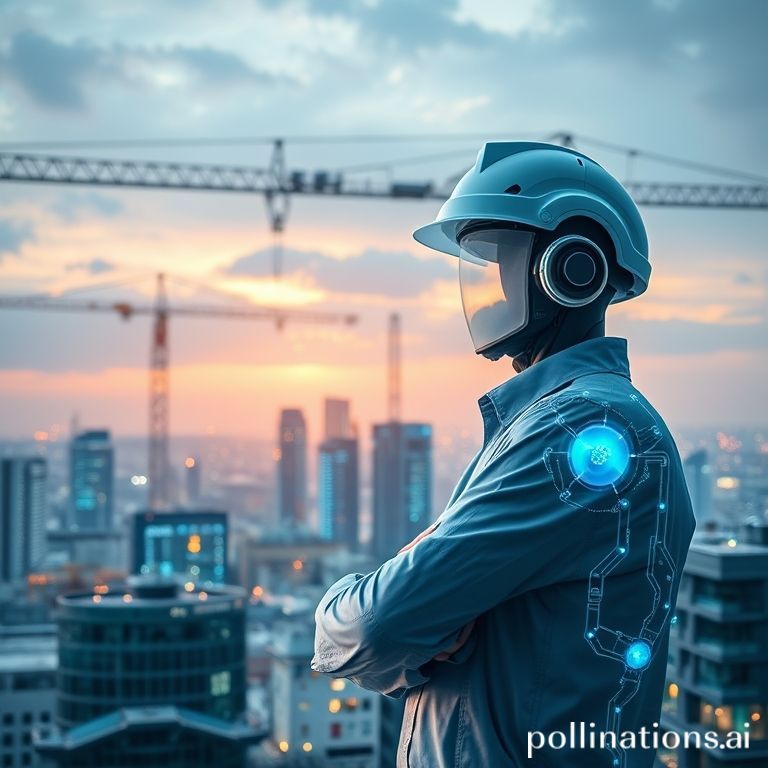
AI in Firefighting Operations Management in Saudi Mega-Projects
author: Eng. Khaled Al-Sabae category: Safety Management in Mega-Projects dataAiHintHero: A futuristic image depicting AI-powered fire safety s... tags: - risk-management - ai - technology category: risk-management
author: Eng. Khaled Al-Sabae category: Safety Management in Mega-Projects dataAiHintHero: A futuristic image depicting AI-powered fire safety systems in a modern Saudi Arabian mega-project. Show advanced sensors, predictive analytics dashboards, and robotic firefighting units integrated seamlessly into the architectural design. The overall aesthetic should be clean, professional, and technologically advanced, reflecting a sense of innovation and security. date: '2025-05-22' heroImageSrc: /images/blog/headers/ai-in-fire-safety-saudi-mega-projects_1747914427981.jpg metaDescription: "Discover how AI is revolutionizing firefighting operations management" in mega-projects in Saudi Arabia, with practical insights from Eng. Khaled Al-Sabae''s expertise. Advanced technologies, innovative solutions, and enhanced safety.
' readTime: 3 min slug: ai-in-firefighting-operations-management-in-saudi-mega-projects tags:
- Artificial Intelligence
- Firefighting
- Project Safety
- Saudi Mega-Projects
- Risk Management title: AI in Firefighting Operations Management in Saudi Mega-Projects
Introduction
In light of the rapid development of mega-projects in the Kingdom of Saudi Arabia, especially in the infrastructure, oil, and gas sectors, there is an urgent need for innovative solutions to enhance public safety and reduce potential losses resulting from fire incidents. Artificial Intelligence (AI) is one of the most promising technologies that significantly contributes to this field by providing smart and advanced systems for managing firefighting operations with high efficiency and proactive effectiveness. This article will review how to apply AI technologies in this context, benefiting from the expertise of Eng. Khaled Al-Sabae in project management and AI applications, as explained in his book "Artificial Intelligence in Project Management."
AI-Powered Early Warning Systems
Traditional early warning systems rely on simple sensors that may suffer from limitations in accuracy and response speed. AI-powered early warning systems, however, are distinguished by their ability to analyze data from multiple sources, such as heat and smoke sensors, thermal camera images, and weather data. AI uses machine learning algorithms to recognize potential fire patterns and predict their occurrence before they happen, providing a greater opportunity to extinguish them in their initial stages. Techniques such as AI image processing can be used to detect smoke or flames very early, before traditional systems would.
Big Data Analysis in Fire Risk Management
AI techniques are used to analyze big data from various sources, including previous fire records, sensor data, and weather data, to identify areas most exposed to fire risk and determine contributing factors to fire incidents. This data can be used to create risk maps, develop effective preventive measures, and optimally allocate firefighting resources. Tools like Google Sheets and Gemini API can be used to process and organize this big data, facilitating the analysis process.
Automated Control of Firefighting Systems
AI can automatically control firefighting systems, such as water sprinklers and chemical spray systems, based on data received from sensors. It can accurately determine the location of the fire and the appropriate amount of water or chemicals needed to extinguish it, contributing to reducing losses and increasing the efficiency of the extinguishing process. Algorithms can be programmed to make quick and effective decisions in emergencies, reducing fire response time.
Human Resources Management in Firefighting Operations
AI assists in managing human resources involved in firefighting by providing accurate information about fire locations, their severity, the best ways to access them, and the optimal distribution of firefighting teams. AI can also be used to train firefighting teams, evaluate their performance, and improve their skills in dealing with emergencies.
Hypothetical Case Study: NEOM Project
Let's assume that the NEOM project uses an intelligent AI-powered firefighting system. This system collects data from thousands of sensors spread throughout the project and analyzes it using deep learning algorithms to detect any fire indicators very early. In the event of a fire, the system sends immediate alerts to firefighting teams, accurately identifying the fire's location and providing information on the best ways to access it, contributing to rapid response and effective extinguishing.
Conclusion
The use of AI in managing firefighting operations in mega-projects is a fundamental step towards enhancing public safety and reducing potential losses. AI technologies enable the development of intelligent and effective systems capable of predicting fires, automatically controlling firefighting systems, and managing human resources with high efficiency. We urge engineers and project managers in Saudi Arabia to adopt these advanced technologies and benefit from Eng. Khaled Al-Sabae's expertise in this field to build safer and more sustainable projects.