
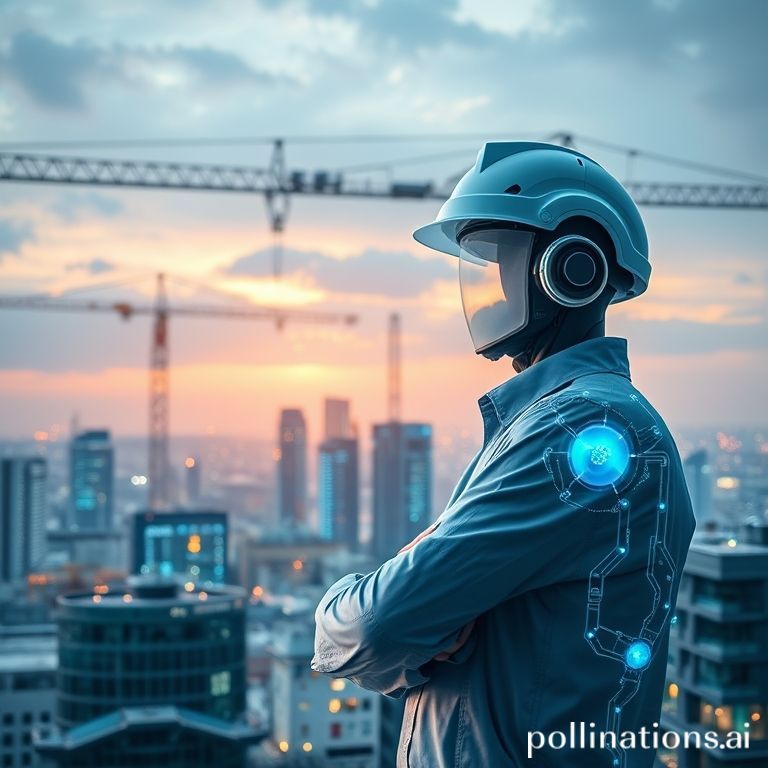
Artificial intelligence and sustainable engineering: a green future for the Middle East
introduction
Today, the world is witnessing a rapid shift towards adopting sustainable practices in various sectors, especially in the field of engineering and construction. In this context, artificial intelligence has emerged (Artificial Intelligence - AI) as a strong tool capable of revolutionizing this field, which contributes to building a green future for the Middle East. This article aims to review the most prominent innovations of artificial intelligence in sustainable engineering, and how these technologies contribute to achieving sustainable development goals in the region.
Artificial Intelligence and Sustainability Challenges in the Middle East
The Middle East faces major environmental challenges, including water scarcity, high temperatures, and increasing energy demand. Artificial intelligence is a promising solution to these challenges, through its role in:
*** Improving energy efficiency: ** Artificial intelligence can analyze energy consumption data in buildings and cities, and identify areas that need to be improved, which contributes to reducing carbon emissions. Smart Building Management Systems*which relies on artificial intelligence to control lighting, conditioning, and heating, is used smart and effectively. ** Water Resources Management: ** Artificial intelligence can improve water resources management by analyzing rainfall data, groundwater levels, and identifying areas that suffer from water deficiency. It also helps in developing smart irrigation techniques, which reduces water consumption in agriculture. *** Renewable energy development: ** Artificial intelligence contributes to improving energy generation efficiency from renewable sources, such as solar energy and wind energy, by improving the design of solar panels and wind turbines, and expecting energy production. *** Sustainable urban planning: ** Artificial intelligence can be used in urban planning to design smart and sustainable cities, with a focus on reducing carbon footprint, improving mobility, and providing green spaces.
practical applications for artificial intelligence in sustainable engineering
** 1. Green Building: **
Artificial intelligence is used in green buildings design, by simulating buildings performance, determining the right materials, and reducing energy consumption. * BIM * techniques (building information modeling) are used to artificial intelligence to create three -dimensional models of buildings, with an accurate analysis of their environmental performance.
** 2. Waste Management: **
Artificial intelligence can improve waste management by analyzing waste data, identifying waste types, and designing waste sorting systems effectively, which contributes to reducing the amount of waste that goes to healthy burials.
** 3. Sustainable transportation: **
Artificial intelligence helps improve public transport systems, by improving bus scheduling, reducing traffic congestion, and encouraging public transportation.
Status studies in the region
(Here it is possible to add specific case studies from the Kingdom of Saudi Arabia or the Arab Gulf states, with a focus on successful projects in the field of sustainable engineering, and clarifying the role that artificial intelligence played in these projects.)
Challenges and opportunities
Despite the great capabilities of artificial intelligence in sustainable engineering, there are some challenges that must be overcome, such as:
*** Data shortage: ** Artificial intelligence systems need large quantities of data to train, and obtaining this data may be a challenge in some areas. ** The cost of technology: ** The cost of applying artificial intelligence technologies is sometimes high. *** Human experience: ** The application of these technologies needs experts specializing in artificial intelligence and sustainable engineering.
Conclusion
Artificial intelligence plays a crucial role in building a sustainable future for the Middle East, by revolutionizing engineering and construction. This field provides great opportunities to improve resource use efficiency, reduce carbon emissions, and build smart and sustainable cities. While overcoming challenges, the Middle East will witness great progress in the field of sustainable engineering, which contributes to achieving sustainable development goals and building a better future for future generations.
The most important thing in the article:
Artificial intelligence is a promising solution to the challenges of sustainability in the Middle East. Artificial intelligence contributes to improving energy efficiency and water resources. Artificial intelligence can develop innovative solutions in the fields of green construction and waste management. Investing in artificial intelligence technologies is an opportunity to build a sustainable future in the region.
The next step
[Discover more about how to help our experiences build a sustainable future for your company, contact us today! ((Info@khaledsabae.com) {: