
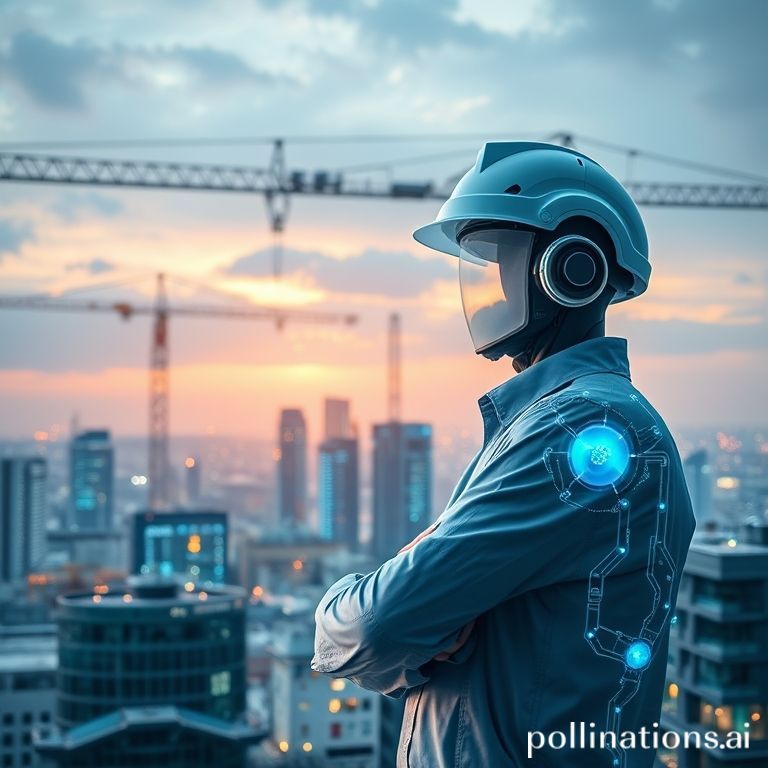
Does artificial intelligence replace safety engineers? Challenges and opportunities
introduction
The world is witnessing an accelerated development in the field of artificial intelligence (ARIATIONCE - AI), raising questions about its impact on various sectors, including the safety engineering sector. Can artificial intelligence replace safety engineers? This pivotal question that we will discuss in this article, reviewing the challenges and opportunities presented by this accelerated technical development, with a focus on the Saudi and Gulf market.## Artificial Intelligence in Safety Engineering: Opportunities Artificial intelligence provides promising opportunities in the field of safety engineering, as it can be used in: ** Huge data analysis: ** Artificial intelligence can process huge amounts of safety related data, and predicting potential risks before it occurs, which contributes to taking effective preventive measures. ** Mechanical monitoring: ** Artificial intelligence systems can be used in continuous monitoring of industrial and construction processes, and to detect any deviations from the specific safety standards, with immediate alerts.*** Automated control of risk: ** Smart systems for automated control of equipment and machinery can be designed, interacting with emergency situations in a safe and effective way. *** Improving safety designs: ** Machine learning techniques*to design more efficient and safe safety systems, based on the analysis of historical data and previous failures. *** Training and qualifying engineers: ** Virtual reality techniques and simulations based on artificial intelligence can be used to train and qualify safety engineers to deal with various accident scenarios..
The challenges facing the use of artificial intelligence in safety engineering
Despite promising opportunities, there are great challenges facing the use of artificial intelligence in safety engineering, including: ** Relying on data: ** Artificial intelligence depends heavily on the quality of the data entered, the inaccuracy or incomplete data may lead to inaccurate or misleading results.*** Transparency and interpretation: ** Some of the artificial intelligence algorithms are consideredblack boxes, that is, it is difficult to understand the mechanism of its work, which makes it difficult to explain its results and determine its causes, and this is very important in the field of safety engineering. *** Ethics and responsibility: ** It is necessary to develop a clear moral and legal framework to regulate the use of artificial intelligence in safety engineering, and to determine responsibility in the event of accidents. *** The cost: ** Development and deployment of advanced artificial intelligence systems requires a high cost, which may represent an obstacle for some companies and institutions.*” .
Will artificial intelligence replace safety engineers?
Artificial intelligence is unlikely to replace the entire safety engineers in the foreseeable future. Instead, artificial intelligence will be a powerful tool and an effective assistant to engineers, which helps them improve their performance and increase their efficiency. The role of the human engineer will remain decisive in making critical decisions, reviewing the results of artificial intelligence, and ensuring the safety of operations.## Conclusion Artificial intelligence is a great opportunity to enhance safety in various sectors, but the accompanying challenges must be dealt with carefully. Investing in the development and application of artificial intelligence technologies in safety engineering requires accurate planning, taking into account the moral and legal aspects. The future lies in cooperation between man and the machine, where artificial intelligence works as a strong tool to enhance the efficiency and effectiveness of safety engineers, and not as a substitute for them.
The most important thing in the article:Artificial intelligence provides great opportunities to enhance safety, but it raises challenges related to data, transparency and ethics.
Artificial intelligence is unlikely to replace the safety engineers, but rather will act as an aid tool. Investing in artificial intelligence in safety engineering requires accurate planning and legal and moral organization.
The next step
[Contact us to learn more about artificial intelligence applications in the field of safety] ((info@khaledsabae.com) {: