
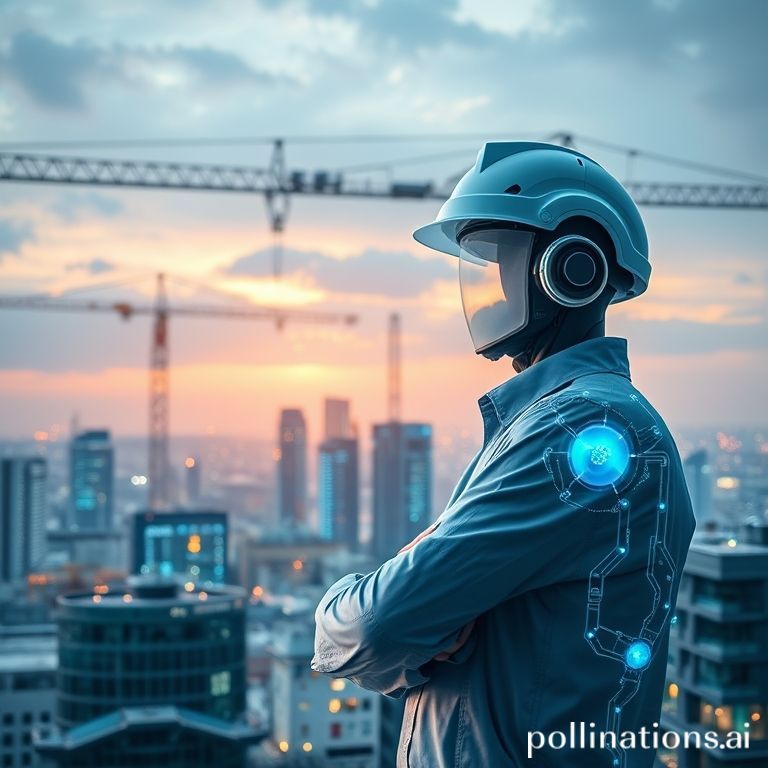
The ethical challenges of artificial intelligence in bridges design: safety and responsibility guarantee
introduction
The world is experiencing an accelerated development in the field of artificial intelligence (AIRLLIOLIONCE - AI), which opened new horizons in various sectors, including the civil engineering sector. Artificial intelligence is currently used to design bridges, providing opportunities to improve efficiency and reduce costs. However, the use of these new technologies raises important moral challenges related to safety and responsibility guarantee.## The role of artificial intelligence in bridges design Artificial intelligence contributes to the design of bridges through several ways, including:*** Huge data analysis: ** Artificial intelligence can analyze huge amounts of data related to soil properties, loads, and weather conditions, which helps in designing more durable and safe bridges. *** The optimal improvement of design: ** Artificial intelligence can generate many different designs, and choose the optimal design that meets the requirements specified at the lowest cost and maximum efficiency. *** Predicting possible problems: ** Artificial intelligence can predict potential problems during the design and construction process, which helps to avoid them and reduce risks.## Ethical Challenges Despite the many benefits of using artificial intelligence in bridges design, it raises some ethical challenges, including:
1. Transparency and accountability
It is sometimes difficult to understand how artificial intelligence takes its decisions, raising questions about transparency and accountability. It is necessary to ensure the ability to understand the decisions made by artificial intelligence, and determine responsibility in the event of errors.### 2. Accounting for errors In the event of a bridge design error due to the use of artificial intelligence, it is important to determine responsibility and apply the necessary penalties. Do developers bear artificial intelligence responsibility? Or honorable engineers? Or both?
3.
Data used to train artificial intelligence systems may contain biases, which leads to inaccurate or unfair results. It is important to ensure that the data used is free of biases, and that the results produced by artificial intelligence are fair and fair.### 4 Data Security The data used to train artificial intelligence systems should be protected from unauthorized access, and ensure the confidentiality of these data.
Safety and responsibility guarantee
To avoid the above ethical challenges, several measures must be taken, including:*** Ensuring the quality of data: ** Demary and reliable data should be used to train artificial intelligence systems. *** Reinforcement of transparency: ** The ability to understand the decisions taken by artificial intelligence must be guaranteed. *** Responsibility: ** The responsibility must be determined in the event of errors. *** A moral framework setting: ** A clear moral framework must be established that regulates the use of artificial intelligence in the design of bridges. ** Independent audit: ** An independent audit must be made to ensure the safety of designs produced by artificial intelligence.## Examples from the Saudi and Gulf market (Here, specific examples of projects in Saudi Arabia and the Arab Gulf states that use artificial intelligence can be added in the design of bridges, with a focus on the ethical aspects associated with them. You can search for related state or governmental state studies).## Conclusion The use of artificial intelligence in bridges is a great opportunity to improve efficiency and reduce costs, but it is necessary to address the moral challenges associated with this technology. Transparency and accountability, data protection, and a clear moral framework must be set to ensure the safety of bridges and the safety of users.
The most important thing in the article:Transparency and accountability should be guaranteed to use artificial intelligence to design bridges.
- You must ensure the quality of the data used to train artificial intelligence systems. A clear ethical framework must be established that regulates the use of artificial intelligence in bridges design. Independent audit must be done to ensure the integrity of the designs produced by artificial intelligence.
The next step
[Contact us to learn more about how to apply artificial intelligence safely and responsibly in your engineering projects. ((Info@khaledsabae.com) {: